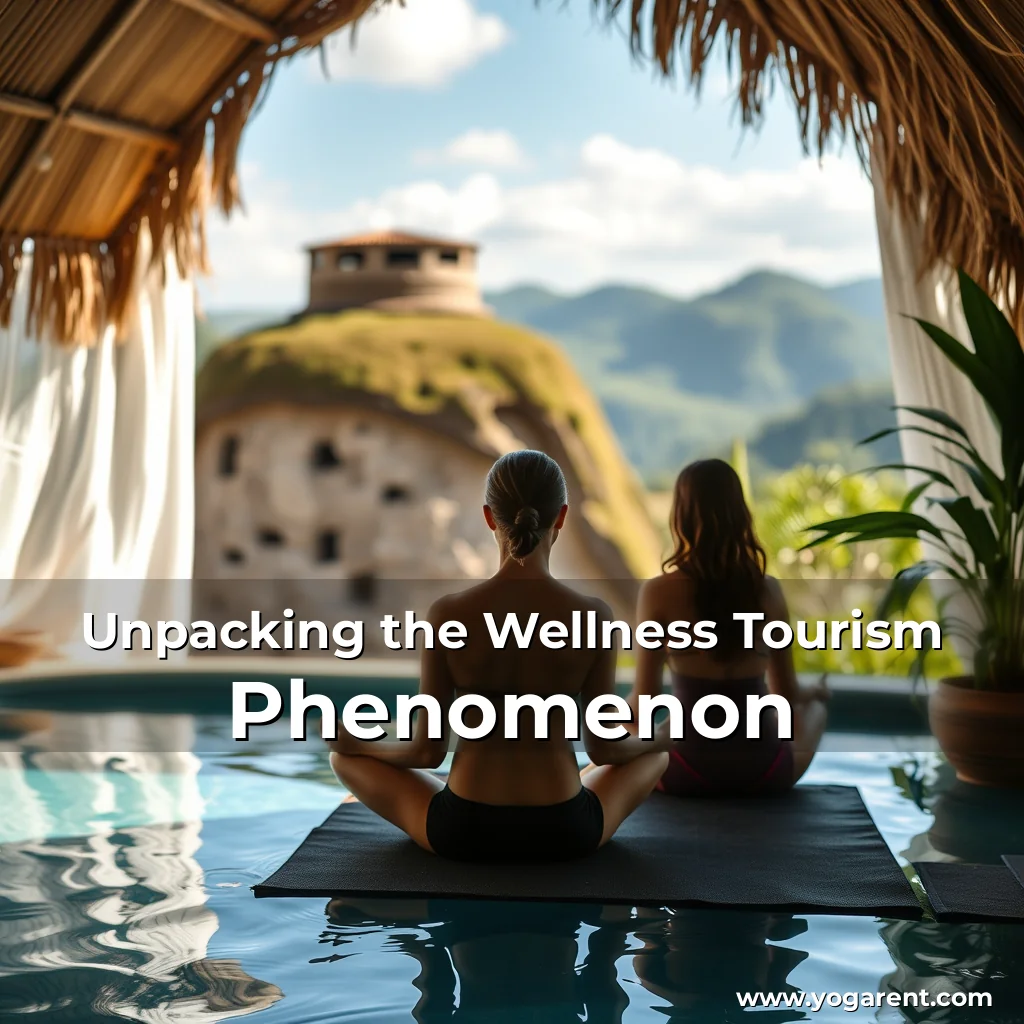
Wellness tourism has become an increasingly popular trend in recent years, with Kiwis ranking third highest in Google searches of “retreats”. But what drives this demand for wellness-focused travel? To answer this, we must first understand how wellness has evolved into a cultural force and gigantic industry. In 2023, the wellness economy was worth US$6.3 trillion ($11.18 trillion) and is projected to grow to almost US$9.0 trillion by 2028. This growth is not limited to a specific demographic, as Europe’s largest hospitality and hotel company, Accor, describes wellness as “an imperative for all” to “maintain the equilibrium of our lives, our society, and our planet”. As people become more discerning about their health and habits, these preferences extend to their holiday choices, swapping traditional all-inclusive resorts for farm-to-table meals and off-grid glamping. The Global Wellness Institute defines wellness tourism as “travel associated with the pursuit of maintaining or enhancing one’s personal wellbeing”. This can take many forms, including fully inclusive retreats, guided experiences like nature walks or yoga classes, and alternative treatments. Many businesses and tour operators capitalize on nature’s physical, mental, and social benefits, often located in remote islands, beaches, or forests. The luxury market is primarily targeted towards affluent individuals, with TIA’s Thomas stating that wellness travellers significantly outspend the average. “People visiting for wellness purposes significantly outspend the average,” he said, adding that it could be because wellness travellers are comfortable investing strongly in their wellbeing or because it’s wealthy travellers who tend to go on wellness trips. The motivations behind wellness travel are distinct from traditional travel. While pleasure and leisure have always been the primary goals, wellness travel is driven by a desire to improve one’s health, mental wellbeing, and appearance, as well as experience a prolonged period of rest. A wellness traveller could be in Costa Rica or Bali, Fiji or Ibiza, and be unable to discern the location from the universal aesthetic of open-floor spaces, beige minimalist furniture, potted greenery, and essential oils. The desire for rest is a significant factor in the popularity of wellness tourism. “When you have such little time off, you really can’t afford to come back from a vacation where you drank too much, stayed up all night, and ate really horrible food,” Beth McGroarty, the director of research at the Global Wellness Institute, told FastCompany. As the pace of life continues to increase, the need for rest and relaxation becomes more pressing. In 2024, 61% of Kiwi employees said they were burnt out, up from 53% in 2023, according to a Wellness at Work Report by Employment Hero. The pressure to optimize is another driving force behind wellness travel. Today, it’s standard to feel the need to always strive for more, with social media’s limitless parade of peers achieving and excelling heightening this expectation. One has just quit their nine-to-five job after their side hustle business took off, another just planned a wedding, one is working remotely while travelling Europe, and another bought a house. In this environment, taking time off is to fall behind, to risk being perceived as lazy. Active travel has long given travellers a sense of achievement, but wellness tourism offers a more indulgent approach. It’s not just about staying at a nice hotel, getting massages, or glamping off-grid, but “doing the work” to become one’s best self. Wellness as a status symbol is also a factor in its popularity. “In the twenty-first century, elites are further reaffirming their position by spending more on those goods and experiences that radically inform and shape their quality of life and future success,” Elizabeth Currid-Halkett writes in her 2017 book The Sum of Small Things. The top of the food chain has traded their Louis Vuitton for Lululemon and Michelin-star dinners for trips to Erewhon, a cult-status food store from LA. They spend on supplement powders and Oura rings, $35 pilates classes, and lymphatic massage. The research bears out that wellness tourists are most often wealthy, university-educated consumers who are health-conscious and open to holistic therapies. So, it’s no surprise that wellness and luxury tourism have become almost synonymous. Industry insights find that properties are identifying the need to step up their game to cater to the growing demand for wellness travel. “Properties both internationally and locally are identifying the need to step up their game to cater to the growing demand for wellness travel,” said Expedia’s Haley Purdon. It’s not a hard sell; who wouldn’t want to float home from their vacation on a cloud of serenity? Who wouldn’t want their weary body pampered, their mind quietened by nature, to transform their life at a weekend retreat, or at least attempt to? But does wellness tourism work? Studies have tried to test the claims of these retreats. In 2017, researchers at RMIT University’s School of Health and Biomedical Sciences conducted a study on wellness retreats, assessing the physical and mental health of 37 participants before and after a seven-day program at Queensland’s Gwinganna Lifestyle Retreat. The study found that participants showed “statistically significant and clinically relevant improvements” in their physical and mental health, which persisted six weeks post-trip. However, it’s essential to note that the results were not due to any “magic” retreats, but rather the participants’ consistent performance of healthy habits, such as increased physical activity and healthy eating. While no retreat or experience will be a silver bullet, it’s comforting to know that the “well” of wellness travel is within our control. If you’re seeking pleasure and leisure, and wellness practices fit the bill, then fill your holidays with meditation, yoga, organic smoothies, and nature walks – I certainly do. But if you’re secretly hoping for deeper, lasting changes in mind or body, these often don’t come from escaping life. Instead, they emerge from experiences that offer robust education and seedling-like habits that take root and last long after a trip does. In conclusion, the wellness tourism phenomenon is a complex and multifaceted industry that is driven by a desire for rest, relaxation, and self-improvement. While it may not be a silver bullet, it can be a powerful tool for personal growth and transformation. By understanding the motivations behind wellness travel and the benefits it offers, we can make informed choices about how to incorporate wellness practices into our lives.
The Future of Wellness Tourism
As the industry continues to grow and evolve, it’s essential to consider the future of wellness tourism. With the global wellness economy projected to reach $2.48 trillion by 2027, it’s clear that wellness travel will remain a significant sector of the tourism industry. The industry’s growth is expected to be driven by increasing demand for wellness-focused travel, particularly among affluent individuals and corporate clients. The luxury market is expected to continue to dominate the industry, with high-end retreats and resorts offering bespoke wellness experiences. However, the industry is not without its challenges. The rise of wellness tourism has also led to concerns about over-tourism, environmental degradation, and the exploitation of local communities. It’s essential for the industry to prioritize sustainability and responsible tourism practices to mitigate these concerns. As the industry continues to grow and evolve, it’s crucial to consider the impact of wellness tourism on local communities and the environment. By prioritizing sustainable and responsible tourism practices, the industry can ensure that the benefits of wellness tourism are shared equitably among all stakeholders. In conclusion, the future of wellness tourism holds much promise, with the potential to transform lives and promote personal growth. As the industry continues to grow and evolve, it’s essential to prioritize sustainability and responsible tourism practices to ensure that the benefits of wellness tourism are shared equitably among all stakeholders.
Case Studies: Aro Ha and The Lodge at Woodloch
Aro Ha and The Lodge at Woodloch are two examples of wellness retreats that offer unique and transformative experiences. Aro Ha, located in the heart of New Zealand’s South Island, offers “evidence-based wellness intensives” that transform one’s state of well-being. The retreat provides a range of activities, including yoga, meditation, and outdoor pursuits, all designed to promote physical and mental well-being. The Lodge at Woodloch, located in the Pocono Mountains of Pennsylvania, offers “creative and stress-relieving outlets” that will continue to benefit you long after you leave. The lodge provides a range of activities, including yoga, meditation, and art therapy, all designed to promote relaxation and well-being. Both retreats offer a unique and transformative experience, and demonstrate the potential of wellness tourism to promote personal growth and transformation.
Benefits of Wellness Tourism
Wellness tourism offers a range of benefits, including:
* Reduced stress and anxiety
* Improved physical and mental health
* Increased self-awareness and self-acceptance
* Enhanced creativity and productivity
* Improved sleep quality
* Increased sense of calm and relaxation
These benefits can be achieved through a range of activities, including yoga, meditation, and outdoor pursuits, as well as through healthy eating and relaxation techniques. By incorporating wellness practices into our lives, we can improve our overall health and wellbeing, and increase our sense of calm and relaxation.
Conclusion
In conclusion, wellness tourism is a complex and multifaceted industry that is driven by a desire for rest, relaxation, and self-improvement. In the end, wellness tourism is not just about escaping life, but about creating a life of purpose, meaning, and fulfillment. By prioritizing wellness practices and incorporating them into our lives, we can create a life that is truly our own.
References
* Global Wellness Institute
* Expedia
* Tourism Industry Aotearoa
* RMIT University’s School of Health and Biomedical Sciences
* FastCompany
* Elizabeth Currid-Halkett, “The Sum of Small Things: A Theory of the Aspirational Class”
* Beth McGroarty, “When You Have Such Little Time Off”
Cited Sources
* “The Sum of Small Things: A Theory of the Aspirational Class “ Elizabeth Currid-Halkett (2017)
* “When You Have Such Little Time Off” Beth McGroarty (FastCompany, 2016)
* Global Wellness Institute (
* Expedia (
* Tourism Industry Aotearoa (
* RMIT University’s School of Health and Biomedical Sciences (
* FastCompany (
* Elizabeth Currid-Halkett (
* Beth McGroarty (
* Accor (
* Accor (
* Haley Purdon (
* Greg Thomas (
* The Global Wellness Institute (
* The Lodge at Woodloch (
* The Lodge at Woodloch (
* Aro Ha (
* Aro Ha (
* Elizabeth Currid-Halkett (
* Elizabeth Currid-Halkett (
* Beth McGroarty (
* Beth McGroarty (
* RMIT University’s School of Health and Biomedical Sciences (
Appendix
The appendix includes additional information and resources related to the topic of wellness tourism.

news is a contributor at YogaRent. We are committed to providing well-researched, accurate, and valuable content to our readers.