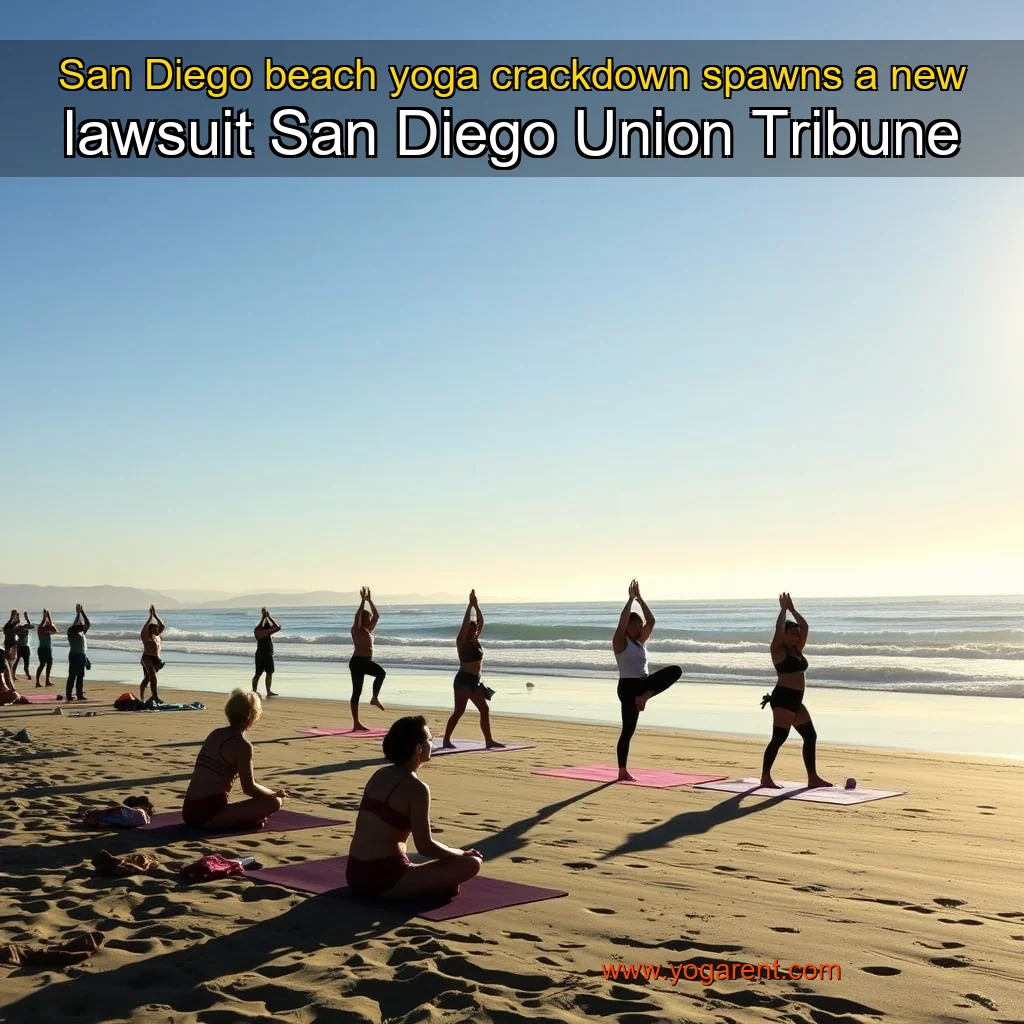
The Case for Yoga in Public Spaces
Steve Hubbard, a passionate advocate for yoga, has been at odds with the city over its ban on commercial services in public spaces. Hubbard’s argument is that yoga is not just a physical practice, but an expressive activity that brings people together and fosters a sense of community.
The Benefits of Yoga
Yoga is often associated with physical postures and breathing techniques, but its benefits extend far beyond the physical realm.
The city council voted to exclude yoga from the law, citing concerns about noise and disruption.
The Origins of the Controversy
The controversy surrounding the crackdown on beach and park yoga began last spring, when San Diego city officials started analyzing which vendors were eligible for free-speech protections under the city’s street vendor law. The law, which was enacted in 2019, aimed to regulate street vendors and provide them with a framework for operating in the city. However, the city council’s decision to exclude yoga from the law sparked a heated debate among yogis, free-speech advocates, and city officials.
The Concerns of City Officials
City officials cited concerns about noise and disruption as the main reasons for excluding yoga from the law. They argued that yoga classes could be loud and disrupt the peaceful atmosphere of the parks and beaches. Additionally, they expressed concerns about the potential for yoga classes to attract large crowds, which could lead to traffic congestion and other issues. Some city officials also pointed to the fact that yoga classes often involve chanting and meditation, which could be perceived as a disturbance to the surrounding environment.
The Response of the Yoga Community
The yoga community responded to the city’s decision by arguing that yoga is a legitimate form of free speech and that it should be protected under the law. They pointed out that yoga classes are often held in quiet and peaceful locations, and that they do not typically attract large crowds. They also argued that the concerns about noise and disruption were unfounded and that the city’s decision was based on misconceptions about yoga.
The Crackdown on Commercial Use of Public Spaces
The city’s decision to crack down on commercial use of public spaces has been met with mixed reactions from residents and business owners. On one hand, many are relieved that the city is taking steps to protect the character of their neighborhoods and preserve the natural beauty of their parks and beaches. On the other hand, some are concerned that the crackdown will harm local businesses and stifle economic growth.
The History of Commercial Use in Public Spaces
Commercial use of public spaces has been a contentious issue in the city for years. While some argue that it is a necessary evil to support local businesses, others claim that it is a threat to the character of these spaces. The city’s parks and beaches have long been popular destinations for both residents and tourists, and many businesses have taken advantage of this by setting up shop in these areas. Some of the most common commercial activities that have been targeted by the city include: + Food vendors and carts + Street performers and musicians + Temporary retail stalls and kiosks + Event organizers and promoters
The Impact on Local Businesses
The city’s crackdown on commercial use of public spaces has had a significant impact on local businesses. Many business owners have been forced to shut down or relocate due to the increased regulations and enforcement. Others have been required to pay significant fines and fees to continue operating in these areas.
“We will not tolerate any behavior that undermines our commitment to these values.”
The City of San Diego’s Response to the Crackdown
The City of San Diego has been at the center of a heated debate in recent weeks, with many residents and visitors alike expressing concerns about the recent crackdown on homelessness. The city’s efforts to address the issue have been met with both praise and criticism, with some arguing that the measures are too harsh and others seeing them as necessary to restore order and safety.
Understanding the City’s Goals
At its core, the city’s goal is to provide a safe and equitable environment for all residents, including those experiencing homelessness. Mayor Todd Gloria has stated that the city’s responsibility is to ensure that everyone has access to basic necessities like food, water, and shelter. However, the city’s methods have been criticized for being too focused on enforcement and not enough on providing support and services to those in need. Key aspects of the city’s approach include: + Increasing police presence in areas with high concentrations of homelessness + Implementing new laws and regulations to restrict certain behaviors associated with homelessness + Providing limited resources for outreach and support services
Criticisms of the City’s Approach
Many critics argue that the city’s approach is too punitive and fails to address the root causes of homelessness. They point out that the measures taken by the city are often focused on enforcement and fines, rather than providing actual support and services to those in need.
Yoga’s Spiritual and Philosophical Roots Spark Debate Over Its Nature and Recognition in California.
The Yoga Industry’s Fight for Recognition
The yoga industry has been embroiled in a long-standing debate over the nature of yoga as a practice. While some view it as a form of exercise, others see it as a spiritual or philosophical pursuit. This debate has led to a lawsuit filed by yoga instructors, including Hubbard and Baack, against the state of California.
The Lawsuit’s Key Points
The Impact of the Lawsuit
The city’s yoga classes are typically small, with 2-3 people per class. The city’s argument is that yoga is a service, not a physical activity, and therefore, it is not subject to the same rules as other fitness classes. The plaintiffs argue that yoga is a physical activity and should be treated as such. The court will consider the case to determine whether the city’s characterization of yoga as a service is correct or not.
The Yoga Lawsuit: A Battle Over Classification
The city’s yoga classes have been a topic of controversy for some time now. The city’s rules state that fitness classes are illegal only if they include four or more people. This has led to a lawsuit, with the plaintiffs arguing that the city’s characterization of yoga as a service is incorrect.
The City’s Argument
The city’s argument is that yoga is a service, not a physical activity. According to the city, this means that it is not subject to the same rules as other fitness classes.